








‘He Believed’— Henrik Sedin, Naslund Revisit Brian Burke's Legacy and Biggest Moves as Ex-Vancouver Canucks Leader Enters Hockey Hall of Fame
Brian Burke changed the course of Vancouver Canucks history, one of his most shining accomplishments in a career now enshrined at the Hockey Hall of Fame.
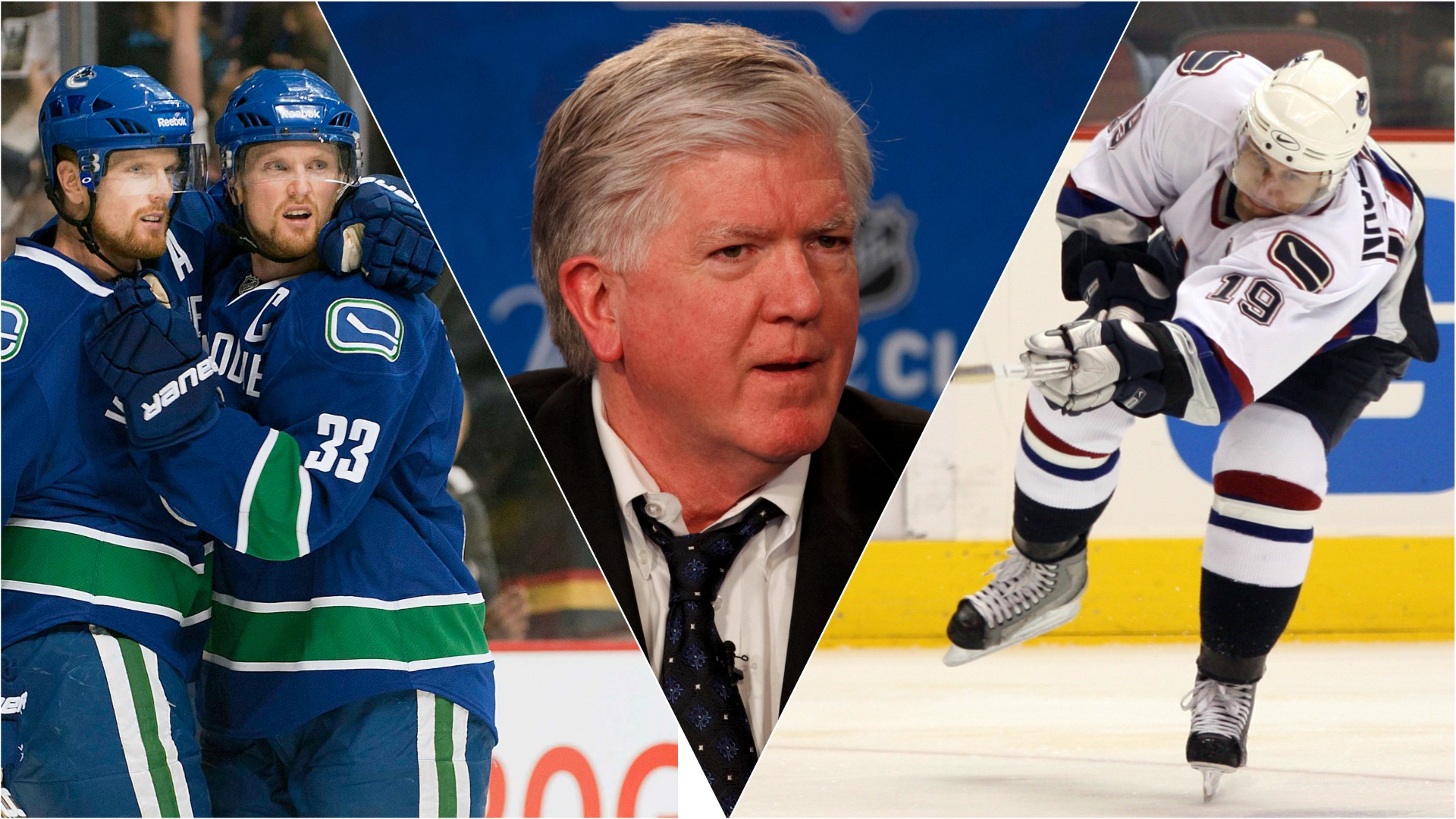
He won a Stanley Cup with the Anaheim Ducks and spent more than four years managing the Toronto Maple Leafs, but Brian Burke’s greatest impact came with the Vancouver Canucks.
Burke was hired to turn around a franchise at the depths of the Western Conference that had alienated many. By the time he was done, he had turned the Canucks into one of the NHL's most entertaining teams, rebuilt the franchise's identity and business, and set a new standard for community involvement.
Perhaps the greatest testament to Burke’s legacy in Vancouver are the two men who now occupy one of the seats he held during his six seasons with the Canucks—The Sedins.
Canucks’ co-Presidents Henrik and Daniel Sedin were drafted by Burke in 1999 and embody everything he conspired to build in Vancouver, save for a championship. Their excellence on the ice is recognized both by the retired numbers hanging at Rogers Arena and by their enshrinement in the same Hockey Hall of Fame that Burke now joins as a builder. Their positive contributions throughout Vancouver and communities across BC are as legendary as the plays they dazzled hockey fans with for 17 seasons.
“Both as players and where we are at in our roles now,” Henrik told Sports Page BC of Burke’s influence on his and Daniel’s careers. “From the day he drafted us, it was one of the main things he talked about. You’re not just here to become good hockey players; you need to be an important part of this community.”
Under his guise, Burke made community service mandatory for every player on the Canucks’ roster. He dramatically expanded the presence and financial reach of the Canucks for Kids Fund, integrated regular player visits to Canuck Place Children’s Hospice and BC Children’s Hospital, and helped establish the annual Dice & Ice Gala, which now routinely raises well over $1 million at each event.
The mandate Burke instituted forever changed the Canucks' relationship with the community and the people of BC when it comes to charitable contributions—but he also built a roster that brought winning back to Vancouver and fans back to the rink.
Under Burke, the Canucks became one of the most exciting and toughest teams in the NHL.
Vancouver’s top line of Markus Naslund, Todd Bertuzzi and Brendan Morrison, dubbed the West Coast Express, became a nightly attraction around the league and led the Canucks back to the top of their division. While those teams are ultimately remembered for their regular-season success and playoff failures, there’s no debating that Burke built the foundation of talent that became critical to the most productive era in Canucks hockey.
A Look Back at Burke’s Most Memorable Canucks Moves
After inheriting an underachieving team with a bloated payroll and a superstar who was intent on leaving town, Burke had his work cut out for him as Canucks’ general manager.
He needed to turn over the roster while determining which players could be part of the solution. The following six moves were the most defining during his six-year tenure as Vancouver’s GM from 1998-2004.
Convincing Markus Naslund to Stay — 1998
youtube
View post ↗One rule Burke managed in Vancouver was that if a player asked for a trade, there was no turning back.
Markus Naslund had struggled to earn ice time and offensive opportunities under head coach Mike Keenan, and Burke sensed the talented winger was on the verge of requesting a change of scenery. As Burke tells it, Naslund walked into his office after requesting to speak with the GM, but Burke never gave him the chance.
“Shut up and listen because I’m afraid you’re going to ask for a trade and once you do, it’s too late. So, hear me out first,” Burke claims he told the talented Swede. “I’m not trading you; you’ll be here long after the coach is. But in the meantime, you’re stealing money, Markus. You’re not backchecking, you’re not forechecking, you’re not scoring goals, you’re a shadow of yourself.”
Naslund’s play improved immediately, Burke recalled, and he began to cement himself as a core piece of the Canucks.
“We have mixed reviews on what happened,” grins Naslund, speaking with Sports Page BC from his home in Sweden when asked about the meeting with Burke.
“He said that he gave it to me and said that I'm playing poorly, but he's not going to trade me. I don't remember it as him being that harsh. I remember him being more encouraging and saying he believed in me. I always felt that Burkie has had a lot of faith in me, and it's been easy playing under him because of that, because I know that he trusted me and gave me a lot of confidence just in the way he treated me.”
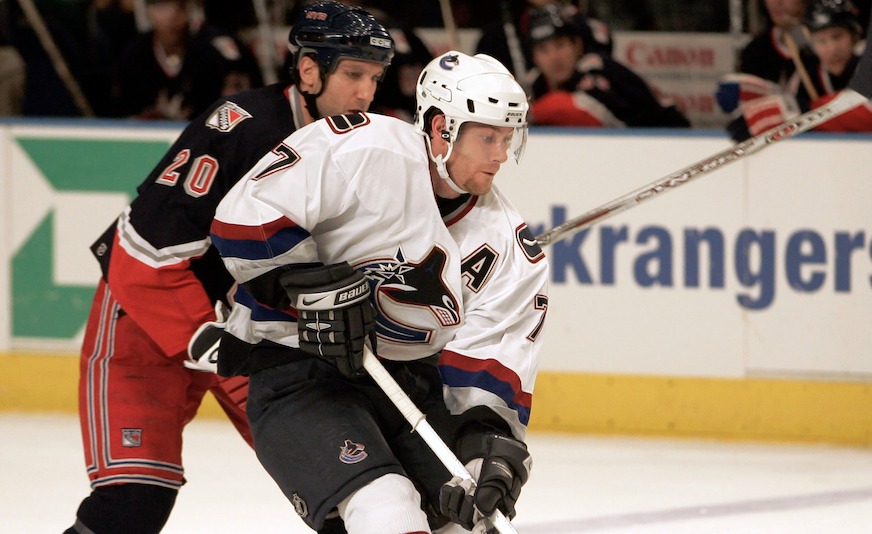
Regardless of how the conversation went, Naslund stayed put. He went on to become the team’s captain, a Lester B. Pearson Award winner, and one of the most productive players in Canucks history. His No. 19 is one of six numbers retired in Vancouver.
The Pavel Bure Trade — 1999
youtube
View post ↗“We’re not gonna kiss anyone’s butt to play here. We have a beautiful arena, we’ve got our own plane, and again, you’re talking a great hockey market and one of the great cities in the world. So, I’m not kissing anyone’s butt to play here. He wants out, I’m gonna move him.” – Burke on Pavel Bure in 1998
After failing to convince Bure to stay with the Canucks, Burke tried to play hardball with the explosive Russian winger and the league, saying he'd only trade Bure if the deal made sense for Vancouver.
However, as the losses and months mounted, Burke finally opted for the best deal he could find and shipped Bure, Bret Hedican, Brad Ference and a 3rd-round pick to the Florida Panthers for Ed Jovanovski, Dave Gagne, Kevin Weekes, Mike Brown and a 1st-round pick.
While Burke didn’t get a superstar back to replace Bure, Burke did acquire a key piece on the blue line in Jovanovski, who would become a force offensively from the back end and a physical presence who delivered highlight-reel hits regularly.
Hiring Marc Crawford as Head Coach — 1999
As he and everyone who followed hockey predicted, Burke quickly butted heads with his coach, the equally stubborn Keenan. The latter had effectively controlled personnel before Burke’s arrival and wasn’t interested in a rebuild with veterans like Mark Messier and Alexander Mogilny at the top of the lineup.
By midseason, Burke had found his coach in Marc Crawford. A former Canuck as a player, Crawford had guided the Colorado Avalanche to the 1995 Stanley Cup and brought an up-tempo style to Vancouver in the middle of The Dead Puck Era.
“I’ve hired some great people; Marc Crawford’s one of them,” stated Burke when asked about bringing Crawford aboard. “He could handle older players; he could handle young players. He single-handedly turned the Sedins into players; he was good with the media. I thought he was terrific.”
Outside of the half season when he was initially hired, Crawford never had a losing season in Vancouver and compiled a record of 246-189-94. Only Alain Vigneault has recorded more victories as Canucks coach.
Wheeling and Dealing to Draft Daniel and Henrik Sedin - 1999
youtube
View post ↗In what remains the most remarkable series of trades atop the draft board in NHL history, Burke delivered a masterclass in maneuvering to get both Daniel and Henrik Sedin.
The Canucks held the No. 3 overall pick, but Burke had no direct path to acquire either of the top two selections, so he shipped defenceman Bryan McCabe and a future first-rounder to Chicago in exchange for the No. 4 pick. He then flipped that pick along with a pair of third-rounders to the Tampa Bay Lightning to acquire the top overall pick.
Now holding picks 1 and 3, Burke approached Atlanta Thrashers general manager Don Waddell, who held the pick in between, with a unique proposition. Burke would trade the No. 1 overall pick to the expansion Thrashers in exchange for the No. 2 pick on one condition: Waddell could not select either of the Sedins.
With the draft held in Atlanta, and the chance to make history as the first expansion team to pick No. 1 overall, Waddell made the deal and stayed true to his word. The Thrashers selected Patrick Stefan, clearing the way for Burke to draft the twins.
Burke’s heist netted the Canucks a pair of Hockey Hall of Fame forwards who would each win a scoring title and eventually lead the team to the Stanley Cup Final in 2011, even though it took more than half a decade for the Sedins to establish themselves as impact players in the NHL.
“The patience he had with us when everyone expected us to produce right away,” Henrik said. “He never put any pressure on us; he protected us in the media, and in a Canadian market where the expectations were so high, that was huge. Especially when you consider how much he gave up to get us because he gave up a lot.”
youtube
View post ↗Trading for Brendan Morrison — 2000
At the 2000 trade deadline, Burke decided to trade another high-profile Russian winger, Mogilny,a consummate professional who had been underachieving in his fifth season with the Canucks.
With his proven scoring track record, he was exactly the type of player a lockdown defensive team like the Cup-contending New Jersey Devils could use. Burke’s target was the Devils’ third-line centre and power-play asset, Brendan Morrison, who also had the bonus of being BC roots.
“The New Jersey Devils were a powerhouse by then, and a guy like Brendan Morrison could get shoehorned out of a job pretty easily. Brendan could never get off the third line even though we felt he had second line potential,” explained Burke.
Burke sent Mogilny to New Jersey, where he would earn a Stanley Cup, but he unknowingly acquired his future first-line centre.
Morrison worked his way up the lineup over the next two seasons, eventually centring Naslund and Bertuzzi in January 2002. The instant chemistry was undeniable, and the trio led the NHL in scoring over the second half of that season. The following year, the West Coast Express combined for a franchise-record 272 points, a total that has yet to be broken by any Canucks line in a single season.
Bringing Trevor Linden Back to Vancouver — 2001
Burke had been instrumental in drafting Trevor Linden No. 2 overall in 1988. Linden became the youngest captain in Canucks history and led Vancouver to Game 7 of the Stanley Cup Final in 1994.
But when Keenan, who coached the Rangers against Linden’s Canucks, arrived in Vancouver, Linden’s days were numbered.
Keenan traded him to the New York Islanders in a deal that returned Todd Bertuzzi, Bryan McCabe and a 3rd- round pick. While the trade proved a coup for Vancouver, fans never forgave Keenan for trading away one of the most popular players in club history.
In 2001, Burke embraced the opportunity to bring Linden back to the West Coast, asking Washington Capitals’ general manager George McPhee what it would take to get Linden back: Washington’s price was steep.
“He said, ‘I’ll trade him, but it’s gotta be a first-round pick.’ You know, Trevor wasn’t young at that point, so I’m like, I’m not doing it,” Burke said. “But then our team got better, and you’re thinking that pick’s gonna be 26th, 25th… not 10th like it used to be. So, then I’m thinking, maybe we can afford it. George wouldn’t budge, so I said Okay, I’ll pay that price.”
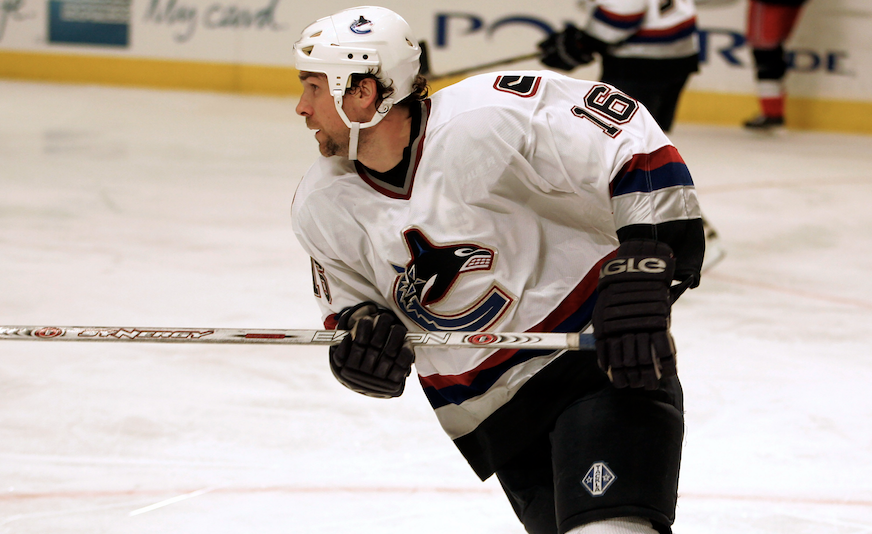
Burke sent both a first-, second-, and third-round pick for a 31-year-old Linden, a trade that ranks as one of his most popular moves and allowed Linden to finish his NHL career in Vancouver, before his No. 16 was eventually retired.
The moves were undeniably formative, and still show with the organization, as it meddles at the bottom of the Western Confernce awaiting its shining new era. Burke’s impact in Vancouver was everlasting, and now forever enshrined in the Hall of Fame, alongside the sport’s most important figures.
Editorial Note: Burke’s quotes were recorded in 2022 during the making of Unreel: West Coast Express
x
View post ↗